Disclaimer: The information on this website is for informational purposes only and not intended to be a substitute for professional medical advice. Always seek the advice of a qualified health provider with any questions you have regarding your medical conditions.
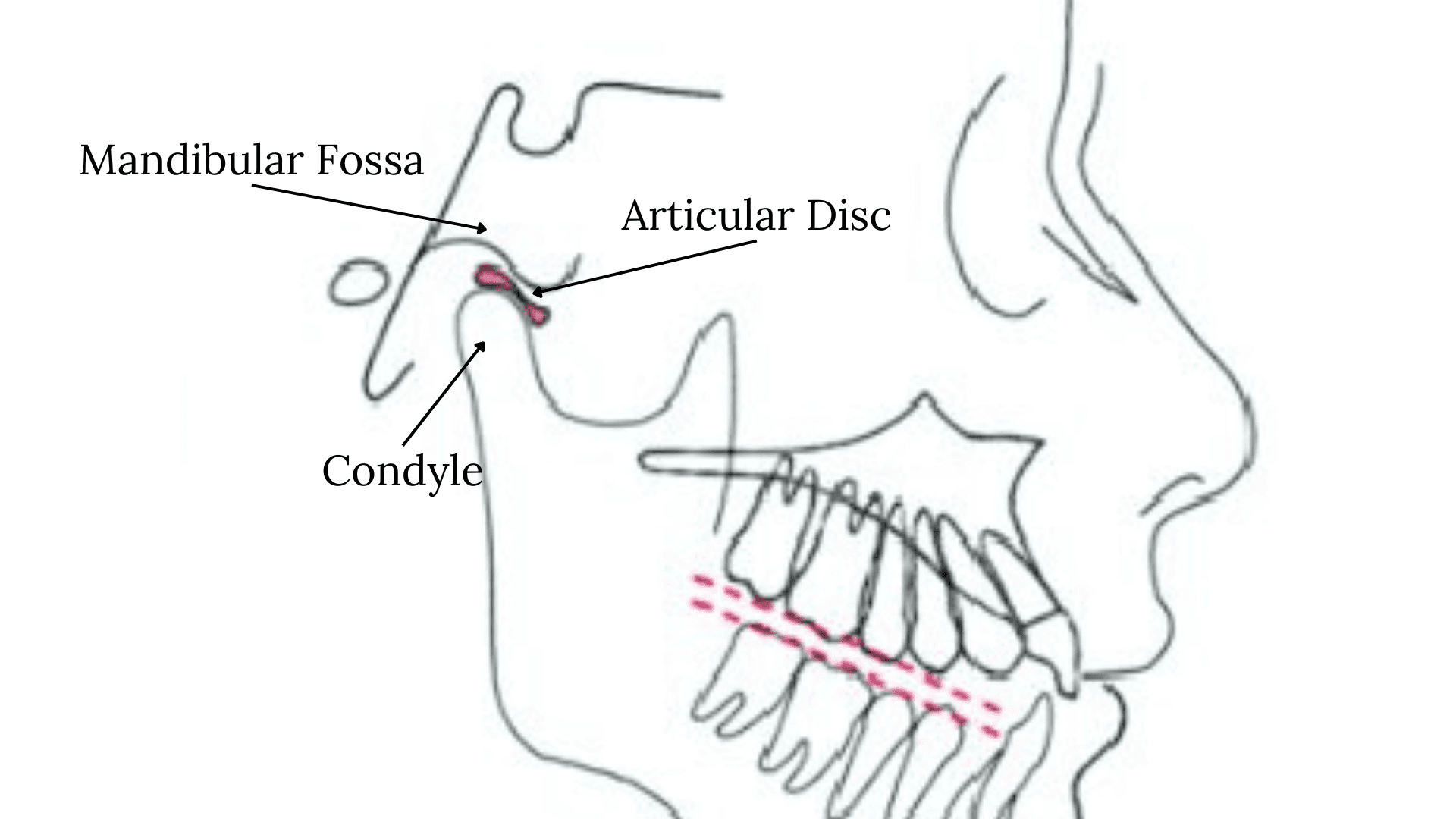
The temporomandibular joint (TMJ) is a complex hinge joint that permits the mandible to smoothly glide forward while opening the mouth. Temporomandibular Disease/Disorder/Dysfunction (TMD), often misreferred to as simply "TMJ", is a complex condition involving abnormalities in the TMJ(s) or related areas. TMD is often categorized into two primary groups, "intra-articular" (within the TMJ) and "extra-articular" (outside the TMJ). In many TMD cases, the primary issue lies within the osseous tissues (bone), meniscus (disc), or surrounding muscles. These two primary diagnostic categories branch much further, making it extremely challenging to understand and diagnose the wide variety of TMD that exist. The optimistic side is that beneficial physical adapatations to stress are prevalant in the TMJs, and a variety of tested, effective treatment options are available for patients in need of physiological corrections. However, the unfortunate reality is that the broad scope of TMD is far from comprehensively understood, so to this day, much research is being conducted in efforts to advance our knowledge of the TMJs and TMD. Well known methods of diagnosis, common diagnoses and standard treatment methods are outlined below. The following utilizes information compiled from professionals in the field and various credible studies to ensure integrity.
This question is prevalent amongst people with TMD. The uncertainty derives from the fact that there is not a single gold standard for professionals who can address all forms of TMD. Thus, it is best to determine what kind of doctor you should see based on your symptoms and/or initial diagnosis. Professionals who treat TMD include orofacial pain specialists, physical therapists, and maxillofacial surgeons, among others.
Symptoms of TMD may be pronounced or subtle, depending on the underlying issue and how your body responds. For instance, a feeling of clicking or locking in the jaw can be an explicit sign of mechanical TMJ disorder, whereas unsuspecting symptoms such as headaches or Eustachian tube dysfunction could be indicative of TMD. It is even possible for various cases of TMJ disease to be entirely asymptomatic. On the contrary, patients may believe they have TMJ disease, but actually are experiencing an unrelated condition, such as neuralgia, that mimics symptoms of TMJ disease. Accurate diagnosis is the utmost crucial step in finding an optimal path forward, providing potential prognostic measures, and a better understanding of underlying problems and associated consequences.
By modern standards, TMJ disease is diagnosed through physical checkups and imaging to attempt to determine the pathology. The imaging standards for the TMJs are cone beam computed tomography (CBCT) and MRI scans. MRIs provide a potentially useful representation of the soft tissue structures (including the menisci) with open and closed jaw position, specifically being useful to identify disc displacement and whether it is with or without reduction. CBCT scans are utilized to understand the health and condition of the maxillofacial osseous structures, most notably the condyle, which can be imaged to identify and monitor potential issues (e.g. ankylosis, osteoarthritis, condylar resorption). In addition to imaging, doctors will test pain points, discomfort, and patient experiences to attempt to develop a proper diagnosis.
CBCT scans may show no clear signs of physiological changes that professionals are able to identify, because imaging appears within the range of "normal," even if subtle to moderate remodeling or degeneration has occurred. This is why, though not widely recommended, it can be helpful to have serial imaging, or a progression of intermittent imaging used for comparison.
Imaging can only work so well to understand the small and complex physiological structures that are the TMJs. Arthroscopic surgery is the furthest down the line non-invasive diagnostic measures can go. Specifically, McCain Level 1 arthroscopy is the go-to procedure surgeons opt for if diagnosis/treatment to that point is unsatisfactory. It generally involves a single incision to perform lavage, view/lyse adhesions, and check for disc perforations. However, this unfortunately cannot provide an entirely comprehensive visualization of the TMJs as the inferior cavity of the TMJ is inaccesible from this superficial incision. This means that modern diagnostic capabilities through non-invasive techniques are limited.
The other subset of TMD is extra-articular. Extra-articular TMJ disease often involves muscular dysfunction and is most appropriately diagnosed and addressed by musculoskeletal specialists such as physical therapists, orofacial pain specialists, or ENTs.
Below are brief descriptions of widely recognized TMD.
Internal derangement refers to the misplacement of structures within the TMJ. This generally takes the form of disc displacement, which frequently occurs anteriorly, and much less commonly, posteriorly. Additionally, anterior disc displacement can be rotational, meaning the disc sits slightly medially or laterally off the condyle in addition to its anterior displacement. Internal derangement is by far the most prevalent intra-articular TMJ disease.
Internal derangement will most commonly feel like clicking or "locking" of the joint, where the jaw may feel stuck or forced in a closed position. It is also possible to not show any obvious symptoms. There is a wide spectrum of symptom extremity for this condition.
Ankylosis is the fusion of the mandible to the skull, causing mastication abnormalities. This has been observed in intra and extra-articular settings, and classified as fibrous (soft tissue), bony, or fibroosseous. It is most often caused by infection or facial trauma in which case a hematoma ossifies near or in the TMJ, limiting movement and coming with a variety of uncomfortable symptoms. Ankylosis is significantly less common than internal derangement and generally considered more debilitating.
ICR is a rare disease, being likely one of the most debilitating documented TMJ pathologies. Females experience ICR much more frequently than males, and as the etymology suggests, there is no proven cause. Although this is the case, there are notable factors that increase the liklihood of ICR, including being of the female gender, history of orthodontic treatment or orthognathic surgery, and condylar anatomy. Most frequently observed with idiopathic condylar resorption is a continous, and sometimes rapid resorption of the mandibular condyle, often necessitating direct intervention.
Myogenous disease are disorders characterized by pain and dysfunction of masticatory muscles. This may be the most wide ranging TMD category. Myogenous disease is most often paired with symptoms that appear externally of the articular joints, including masseter and temporalis pain and tension, headaches, and other seemingly unrelated symptoms. The difficulty of identifying whether TMD is intra or extra-articular will vary by patient, but identification should generally be possible through proper diagnostic steps.
No options described below are endorsed or recommended through author's bias. Studies, research, and professional advice may influence descriptions. The following is simply a collection of superficial explanations of many common or accepted treatments.
Medications are an option to temporarily or permanently treat or suppress TMJ diseases. They are usually not a permanent solution, and there are associated risks and side effects to many such medications. It is highly recommended to only utilize medications that patients advised to as they may not improve or even exacerbate their current state. Listed below are a few common medications used for reducing TMJ symptoms.
Nonsteroidal Anti-Inflamatory Drugs (NSAIDs)
NSAIDs reduce inflammation. This can be useful to reduce pain and discomfort, help with mobility, and even slow condylar resorption in various cases of TMD. Often recommend by professionals is Voltaren topical gel, as it is local and effective at reducing inflammation. Be cautious before taking systemic NSAIDS if you are actively taking blood thinning medications or predisposed to bleeding/internal bleeding.
Corticosteroid Injections
Corticosteroids are anti-inflammatory medications. Corticosteroids such as hydrocortisone and triamcinolone reduce pain and inflammation. They are frequently injected during arthroscopic procedures, or directly without an incision.
Muscle Relaxants
Muscle relaxants are drugs that act on the central nervous system to reduce muscle spasms. They are occasionally recommended for TMJ disease. Medications such as cyclobenzaprine can relax the jaw muscles, reducing the amount of force the TMJ structures receive. However, the use of muscle relaxants is extremely controversial as they aren't guaranteed to do anything beneficial and don't address the underlying problems in almost any use case. Side effects are numerous, though appear under varying circumstances. They include feelings of drowsiness or dizziness, among others.
Other Medications
Other medications may be utilized by medical professionals depending on their understanding of TMD and their treatment philosophy. Not all categories of medications used to address TMD are listed here, and some are intentionally omitted for various reasons.
Injections into the TMJ region are a common treatment for reducing pain or inflammation. Similarly to medications, injections may not improve TMD for many patients, although in some cases, they can provide lasting solutions. Generally, they are used to reduce symptoms.
Platelet Rich Fibrin/Platelet Rich Plasma (PRF/PRP)
PRF/PRP therapy is widely used in medicine to enhance soft tissue healing and reduce osteoarthritic pain in joints. Studies on intra-articular TMJ PRP therapy's effectiveness are too inconcluvsive to make general statements as for whether or not PRP is beneficial for TMD, and specifically under what circumstances. Additionally there isn't a precise protocol for PRF/PRP widely agreed on. PRF/PRP is often done through the patient's preferences, the professional's comfortability, and on a case by case basis.
Prolotherapy
Prolotherapy involves injecting irritants to stimulate a healing response. Studies on prolotherapy tend to produce result on the positive side, but similarly to other regeneration therapies (e.g. stem cell), the efficacy and precise results of prolotherapy remain unclear.
OnabotulinumtoxinA (Botox)
"Botox" is a drug that temporarily blocks nerve signals, preventing muscles from contracting. Clinical use of Botox for TMD is extremely controversial. Botox would typically only be prescribed for extra-articular TMD where the core problem is myalgia rather than mechanical or intra-articular disease.
Splint therapy is a common treatment method used by dentists, orofacial pain specialists and other doctors who treat TMD. Splints also may be used in conjunction with surgery, specifically with some osteotomies. There are dozens of splint designs (many of which are occlusal splints, meaning designed to temporarily adjust occlusion) attempting to achieve differing goals, however, many of these are unlikely to have distinct outcomes, as occlusion does not meaningfully impact intra-articular TMD. Splint effectiveness is especially limited for intra-articular disorders. Studies and clinical trials reveal that splints are a "shot-in-the-dark" approach when used as the primary treatment modality for internal derangement. Additionally, in regards to extra-articular disease, it is not fully clear as to which specific cases would be most likely to benefit from splint usage. For brevity, only the most common splint devices (excluding surgical splints) are briefly described below.
Mouth Guard
A mouth guard is a common dental appliance that fits over one side of your teeth. Many doctors will initially advise patients to try a mouth guard when presented with a TMD case. Mouth guards generally have no effect on TMD and in some cases can benefit TMD or even cause worsening.
Stabilization
A stabilization splint is a dental appliance that fits over all of your teeth, keeping your bite in the same position when teeth are together.
Repositioning
A repositioning splint is a dental appliance that changes the position of the mandible at rest. Differing from other common splint types, it attempts to directly influence the TMJ space in efforts to prevent disc displacement or even reduce the disc. The efficacy and side effects of this device are unclear, making application controversial.
Physical therapy is a broad service, involving patient education and physical intervention to help restore health and function. It is often utilized to correct imbalances, postural issues, mechanical issues, or weaknesses that trigger TMD. Additionally, it can be used to aid recovery after surgical and non-surgical procedures. Physical manipulation such as chiropractic adjustments and manual therapy are sometimes used to correct imbalances or other bodily dysfunctions that can contribute to TMD.
Surgery is a procedure to remove, repair, or adjust bodily tissues. Surgery is generally opted for when minimalistic treatment plans do not achieve the intended outcomes, *and* TMD is severely negatively affecting the patient's life. In some cases, surgical intervention may even be necessary to prevent structural degeneration, though the occurrence of this is exceedingly rare. Just like with any other domain, there are risks involved with TMJ surgical procedures. It would be recommended to fully understand the potential outcomes of surgical procedures before making commitments. That said, there are multitudes of accepted surgical procedures used to address TMD. Check out Surgery Information for more in-depth information on this topic.
Developing treatment modalities are on the horizon. Many of such are being developed actively by institutions and companies, frequently involving prosthetics and next-generation tech. For more information on developing research and treatments, visit Research and Developments.
A major shortcoming in the TMD space is that the internet lacks a comprehensive, accurate information hub strictly pertaining to temporomandibular disease that is also digestible for the average reader. As around an estimated 10-40 million people (though numbers vary by source) in the U.S.A. suffer from some form of TMD, this shortcoming is problematic. Other active sites have moderately informative pages, but contain many factual and logical flaws, exclude key information, and include disproportionate amounts of unrelated or unimportant information. This distracts users from what they're looking for and may result in people deserting their search or taking the wrong steps. Additionally, most existing publications with key information about TMD are too difficult or scattered for many readers to fully digest.
Thus, the aim of TMJ Docs is to fill this gap. Our pages are compiled with information deriving from modern literature, but semantically simplified so information people need can be navigated and understood. In the future, to further our efforts to create and sustain the best TMJ information hub on the internet, we hope to create a system where researchers and professionals can directly contribute to these pages. This will transform our Research and Developments Page. into a dynamic publications service.
Thank you for reading. We wish you luck with your TMD journey!